
When it comes to managing farmland, the challenges stack up quickly. From monitoring soil health to keeping an eye on pests, the sheer number of tasks you have to manage can feel overwhelming.
Here’s where technology steps in to lend a hand. By using innovative tools, farmers can save time, make better decisions, and improve yields while cutting down costs. In this guide, we’re exploring how technology streamlines farmland management, offering solutions that help farmers reap the benefits of modern technology.
Precision Farming Techniques
Precision farming uses advanced tools like GPS and sensors to analyze fields in detail. With this data, you no longer have to treat every part of your field the same. Precision farming allows you to tailor your treatment plan to each particular field.
For example, variable rate technology allows you to apply fertilizers or pesticides only where they’re needed. This method reduces the fertilizer supply you need, which can save money and protect the environment. By targeting resources where they’re needed most, you optimize yields while being mindful of sustainability.
IoT Sensors for Soil Monitoring
Ever wish you could know exactly what’s happening beneath the soil’s surface? IoT (Internet of Things) sensors make this possible. These tiny yet powerful devices monitor soil moisture, temperature, pH levels, and nutrient availability in real time.
With this information, farmers can make informed calls about irrigation and crop rotation. For instance, if your soil starts drying out sooner than expected, the sensors alert you so that you can set up irrigation before your crops suffer. And thanks to smartphone apps that connect with these sensors, you can access your soil data wherever you are. This level of insight helps farmers take the guesswork out of soil management.
Drone Technology for Crop Inspection
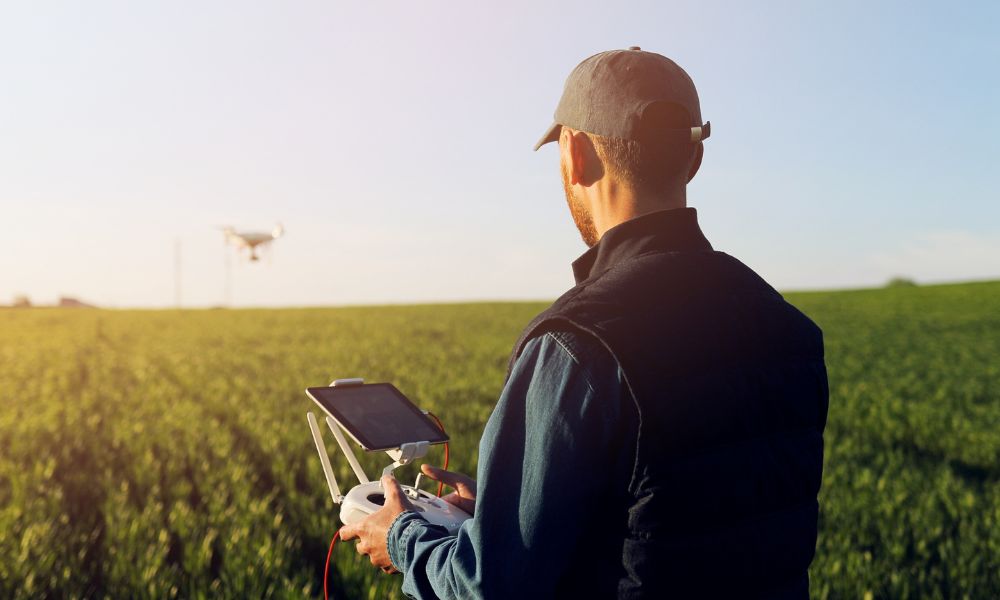
Climbing into a tractor to manually check your fields? That’s yesterday’s method. Farmers today are using drones to scout their crops faster and more efficiently. Equipped with high-resolution cameras and multispectral sensors, drones easily capture aerial images that reveal plant health.
Imagine being able to spot early signs of disease or pest issues without taking a single step into the field. Companies offering land management services often combine drone data with analytics, giving farmers actionable advice to tackle problems before they escalate. This maximizes your time and keeps your crops in top shape.
Data Analytics for Informed Decision-Making
Running a farm requires constant decision-making, and data analytics gives farmers the confidence to make the right choices. By analyzing trends over time, you can make predictions about everything from yield outcomes to market demands.
For example, platforms like CropX or Granular collect and interpret data from a variety of sources, including weather reports, soil sensors, and satellite images. This allows you to see how different variables impact your crops and adjust your strategies accordingly. Plus, these software programs can integrate with your farming equipment to streamline your operation. The more you know, the better equipped you are to maximize profits and reduce risk.
Automated Irrigation Systems
Keeping crops hydrated is crucial, but doing it efficiently is often a challenge. Automated irrigation systems are a popular solution for modern farmers. These systems use AI and IoT technologies to determine exactly how much water is needed and when.
They use sensors to detect soil moisture levels and compare the results to weather forecasts. The irrigation system then adjusts watering schedules to avoid overuse or underwatering. This saves water and cuts down on utility costs. Plus, you don’t need to manually check your irrigation system as often. Enjoy peace of mind knowing the work is done right.
Weed and Pest Control Technologies
Weeds and pests wreak havoc on crops, but advanced technology is helping farmers stay ahead. One innovation to keep an eye on is robotic weed control. These automated machines use AI to identify and uproot weeds without damaging the crops. Robotic weed control methods also reduce labor demands and cut down on pesticide use.
Similarly, smart pest-control systems release targeted solutions to affected areas rather than blanket-spraying a whole field. Farmers using these tools reduce chemical use while maintaining productivity. Smart pest control technology is an efficient farming strategy that also reduces the impact on the environment.
Cloud-Based Farm Management Software
Managing a farm’s day-to-day operations can get complicated. That’s where cloud-based farm management software like FARMS or AgriWebb comes into play. These programs centralize all your farm data and allow you to access it easily.
Farmers can use these platforms to track planting schedules or equipment maintenance. Land management service companies also rely on such tools to support farmers in optimizing their operations. These management companies can use this data to predict yields and inform landowners of updates on the farm. These software platforms make it easier to plan ahead, forecast yields, and stay on top of farm activities.
GPS and GIS Technologies
Gone are the days when farmers would manually measure field boundaries or guess where to plow next. GPS and GIS (Geographic Information System) technologies are now making farming more precise than ever.
GPS ensures machinery stays on course, whether you’re tilling, planting, or spraying. This minimizes overlap and reduces waste. Meanwhile, GIS maps your farm’s geography, helping you visualize patterns, such as soil variability or water drainage. Using these tools together creates a seamless farming experience, improving productivity no matter the crop.
Enhancing Supply Chain Management
The work doesn’t stop after harvest is complete. Getting your product to market efficiently is key to staying profitable. Technology is stepping in here, too, with advanced supply chain management tools.
From tracking inventory levels to monitoring delivery routes, farmers must ensure their produce reaches customers fresh and on time. For example, platforms like AgriChain streamline logistics, helping you manage orders, contracts, and payments all in one place. A well-handled supply chain keeps profits flowing and customers happy.
Expanding Your Current Farmland Management Strategy
Technology has quickly become an essential tool for modern farming. By integrating advanced solutions, from automated irrigation systems and drones to GPS-driven precision farming, managing farmland has never been easier or more efficient. Beyond increasing yields and reducing costs, these innovations also contribute to sustainability and smarter resource usage. Farmers, it’s time to put these tools to work and unlock your land’s potential. Explore the different ways technology can streamline farmland management and adopt what works for your fields to stay ahead of the curve in this tech-driven age of agriculture.