
Understanding Compound Growth
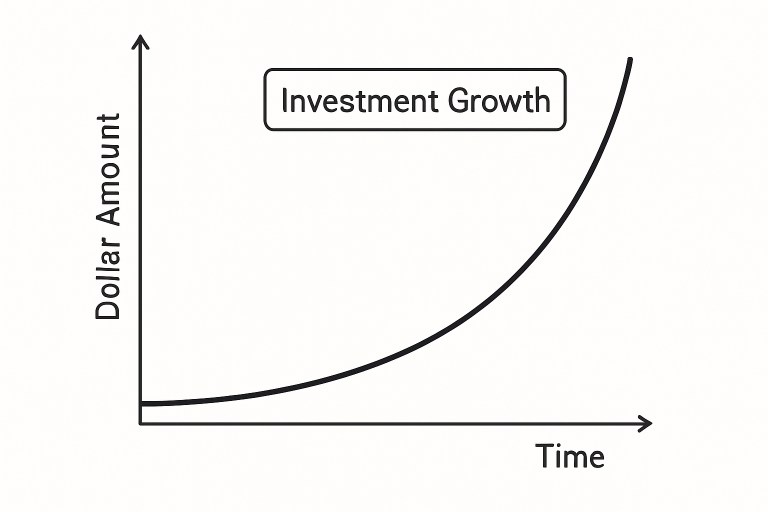
Compound growth occurs when the earnings you make from your investments start to generate their own earnings. This process allows your wealth to grow faster, often described as exponential growth, than with simple interest, where only the original amount earns interest. Compounding is one of the most important financial concepts to understand for anyone looking to build lasting wealth. It essentially means you are earning interest on both your original investment and any prior interest.
Set SMART financial goals for your future to make the most of compounding. Getting started with compound growth begins with setting specific financial milestones. Developing a plan that outlines your savings and investment targets over time helps ensure you’re maximizing this powerful effect. If you want to take the first step, you can set up financial goals to stay on track and measure your progress.
The Role of Time in Compounding
Time is the single most important factor in compound growth. The longer you leave your money to grow, the greater the compounding effect on your wealth. Consider this example: if you invest $10,000 at an 8 percent annual return, in 10 years you will have about $21,589, in 20 years around $46,610, and in 30 years, your investment will grow to approximately $100,627. This is not just a linear increase; it is the direct result of your earnings generating their own returns year after year.
Many people underestimate the impact of even a few extra years. The initial years of compounding may seem slow, but as time progresses, the growth becomes much more powerful as your base of invested capital grows.
Starting Early: A Key to Maximizing Growth
The sooner you start investing, the better positioned you are to benefit from compounding over decades. Picture two individuals: one starts investing $5,000 annually at age 25, and the other begins at age 35 with the same amount each year. If both earn a 7 percent return, the early starter will accumulate over $1 million by age 65, while the later investor will end up with around $505,000. This gap, created by just a 10-year head start, can never be closed by simply contributing more later.
Consistency and Patience in Investing
Consistent contributions to your investment accounts are critical to making compound growth work for you. Automating your investments can help take the emotion out of the process so that you continue making contributions even during market fluctuations. Imagine putting away just $100 per month at an 8 percent annual return. In 30 years, this routine effort would turn into over $150,000. This steady approach, paired with the discipline to leave your investments untouched, is the foundation for financial success.
Reinvesting Earnings to Accelerate Growth
Choosing to reinvest your dividends and interest means your earnings themselves will start to generate more income, ramping up the power of compounding. In tax-advantaged accounts such as IRAs or 401(k)s, reinvesting can be even more effective since your returns grow without being eroded by taxes until withdrawal. This strategy is a hallmark of sophisticated long-term investors and is frequently highlighted by sources like Forbes Advisor, which notes the impact of leaving your investments to grow undisturbed.
Real-World Examples of Compound Growth
Real-world success stories help to bring this concept to life. Consider an individual who invests $500 a month at a 10 percent annual return. Over a 30-year career, their steady investments will grow to approximately $1 million. These examples highlight that it is not always about how much you can save in a single year, but rather how consistently you invest and let compounding work in your favor.
Common Misconceptions About Compound Growth
A widely held myth is that you need a sizeable sum to start investing and benefit from compound growth. In truth, even modest, regular contributions can have a substantial effect over time. Another misconception is the belief that timing the market is essential for success. However, research shows that staying invested is far more important than perfectly timing your market entry and exit. This is because the largest gains often happen in a handful of days, which are easy to miss if you try to jump in and out.
Many new investors also overlook the effect that fees and expenses have on compounding. High fees can erode your returns, so focusing on low-cost funds or platforms is key to getting the most from your investments over time.
Final Thoughts
Compound growth is a financial superpower that can help you build wealth over your lifetime. The key is to start early, invest consistently, reinvest your returns, and exercise patience. Even the smallest contributions, when made regularly and left to grow, can achieve remarkable results. By understanding and committing to these principles, you are giving yourself the best chance at financial freedom and long-term prosperity.