
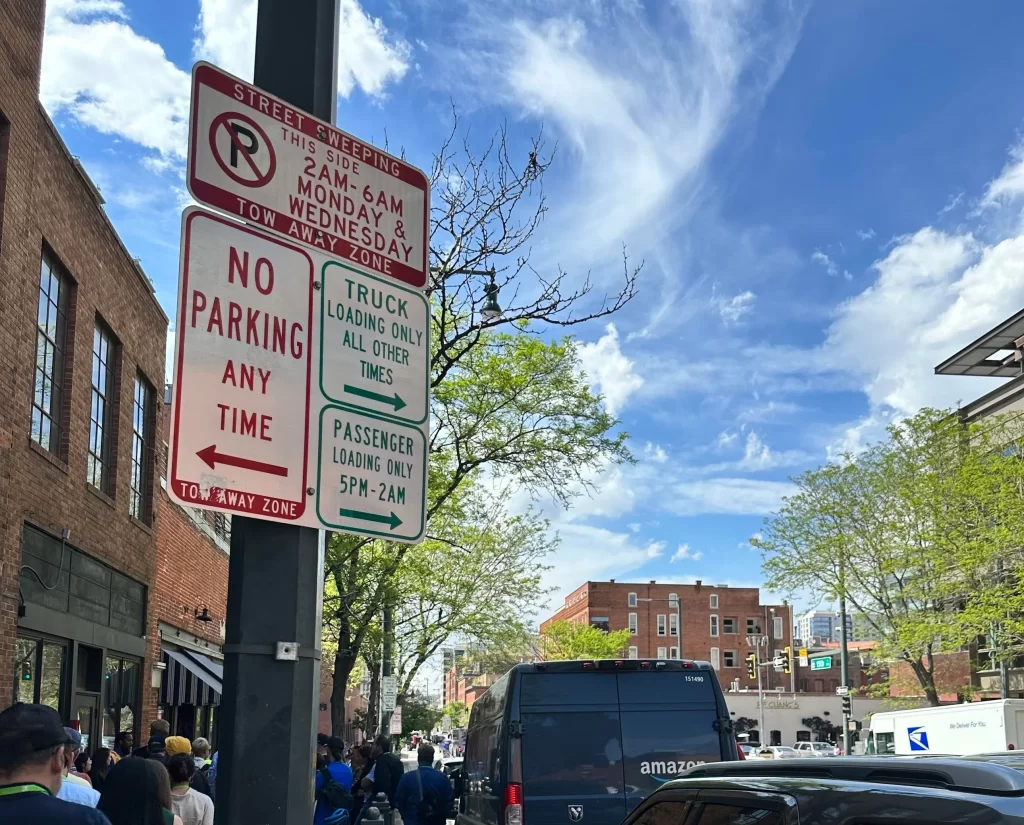
Delivery traffic creates measurable congestion in urban corridors due to unstructured curb access. This congestion is not driven solely by delivery volume, but by the lack of coordinated curb allocation for freight vehicles. When delivery drivers cannot access designated curb space, they resort to double parking, circulating for availability, or stopping in active lanes.
Without structured parking compliance solutions, cities lack the coordination required to regulate freight curb access effectively. This creates a system-level gap in visibility, allocation, and enforcement. As a result, curb access becomes unpredictable and inefficient.
Addressing delivery congestion requires integrated control mechanisms to improve curb access, increase compliance, and minimize lane disruptions. In dense urban environments, even short-duration delivery stops can trigger cascading delays, making curbside efficiency a critical component of traffic management.
Why Delivery Traffic Increases Without Structured Loading Zones?
Delivery vehicles operate within fixed time windows but do not guarantee curb access. This mismatch between demand and allocation leads to inefficient curb usage and increased traffic disruption.
This reflects a failure in curb allocation, where supply is not aligned with delivery demand. In the absence of designated delivery loading zones for urban logistics, drivers lack real-time visibility into allocation. This creates a system gap where vehicles circulate unnecessarily, increasing congestion and reducing network efficiency.
Rising e-commerce demand has intensified competition between freight vehicles, ride-hailing services, and private cars for the same curb space. This multi-user conflict reduces curb availability, forcing vehicles into active lanes, decreasing effective road capacity, and increasing congestion.
Research from the U.S. Federal Highway Administration shows that vehicles searching for parking or loading access can account for up to 30% of urban traffic in busy districts. This highlights how unmanaged curb demand directly contributes to delivery traffic congestion.
How Smart Loading Zones Reduce Delivery Traffic?
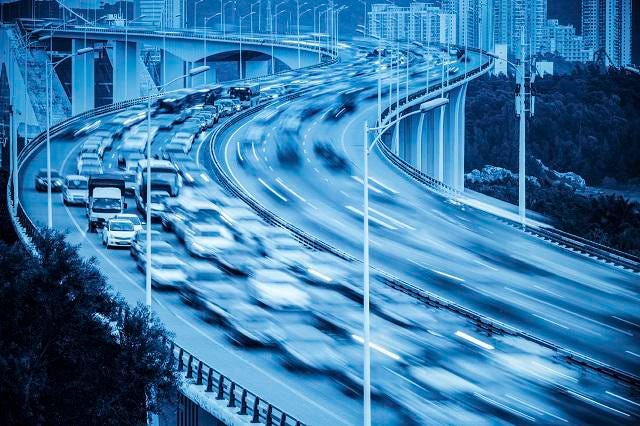
#1 By Reducing Double Parking
Double parking is a primary cause of delivery-related congestion. When curb access is unavailable, delivery vehicles occupy active lanes, forcing traffic to merge and reducing effective road capacity.
Smart loading zones for delivery traffic management provide designated curb access specifically for freight vehicles. This eliminates reliance on illegal stopping and restores lane capacity.
Cities implementing delivery loading zones for urban logistics have reported measurable reductions in double-parking incidents, improving corridor throughput, and stabilizing traffic flow.
#2 By Eliminating Cruising
When drivers lack real-time visibility into curb availability, they circulate through streets searching for space. This behavior increases delivery traffic volume without contributing to movement efficiency.
Smart curbside loading zones for cities provide real-time availability data, allowing drivers to navigate directly to designated spaces. This eliminates unnecessary circulation and improves allocation efficiency.
Reducing cruising behavior lowers traffic density and helps balance throughput with demand, particularly in high-frequency delivery corridors.
#3 By Enabling Scheduled Curb Access
Unstructured, first-come access to curb space creates unpredictability and congestion. Multiple delivery vehicles often arrive simultaneously without guaranteed access, leading to clustering and delays.
Digital loading zone management technology enables scheduled curb access through reservation systems. Delivery operators can book time slots in advance, ensuring predictable, coordinated use.
This structured approach improves curb throughput, reduces idle time, and minimizes conflicts between vehicles. Predictability also supports efficient route planning and reduces unnecessary traffic buildup across connected corridors.
#4 By Increasing Curb Turnover Efficiency
Low curb turnover limits the number of vehicles that can use a loading zone, reducing system efficiency and increasing congestion.
Curbside loading zone management systems optimize dwell times by enforcing time limits and monitoring usage patterns in real time. This ensures that curb space is used efficiently and remains available for multiple vehicles throughout the day.
Industry pilot programs indicate that smart loading zones can reduce delivery parking duration by up to 60% and increase curb turnover by 70%, significantly improving curb throughput and utilization efficiency.
#5 By Optimizing Loading Zone Allocation
Inefficient placement of loading zones creates an imbalance, where some areas experience congestion while others remain underutilized.
Freight curb management solutions for cities use real-time and historical data to identify demand patterns and optimize zone placement. This ensures that loading zones are located where delivery demand is highest.
Optimized allocation improves curb access predictability, reduces congestion hotspots, and increases overall system efficiency. It also supports better throughput-to-demand balancing, ensuring curb space is aligned with real-world usage patterns.
#6 By Enforcing Loading Zone Compliance Digitally
Manual enforcement is limited in coverage and cannot respond in real time to curbside violations. This allows unauthorized vehicles to occupy loading zones, reducing the availability of loading zones for delivery drivers.
Digital loading zone management technology enables automated monitoring and enforcement through sensors, cameras, and license plate recognition systems. These systems detect violations instantly and improve compliance rates.
Higher compliance ensures that loading zones remain available for intended use, increasing curb efficiency and reducing illegal stopping. Consistent enforcement stabilizes curb usage patterns and improves the reliability of traffic flow across corridors.
What Is the Impact on Urban Traffic Flow?
Smart loading zones improve traffic flow by reducing curb-level delivery disruptions. When curb access is predictable and structured, vehicles spend less time circulating, waiting, or blocking lanes.
Reduced double parking increases effective road capacity, while improved turnover enhances curb throughput across high-demand zones. Predictable curb access minimizes sudden stops and merging behavior, stabilizing corridor performance.
These improvements increase network-level efficiency by maintaining consistent traffic movement across connected urban corridors.
Research from Carnegie Mellon University indicates that optimized curb management strategies can increase traffic speeds by up to 4.5% in urban corridors. These outcomes show how smart loading zones for delivery traffic management enhance both mobility and system performance.
Why Cities Are Moving Toward Smart Loading Zones?
The rapid growth of e-commerce and last-mile delivery has significantly increased demand for curb access. Traditional curb systems are not designed to handle this demand, leading to inefficiencies and congestion.
Cities are adopting smart curbside loading zones for cities to create structured, data-driven environments for freight movement. These systems integrate real-time data, allocation strategies, and enforcement to improve curb efficiency.
By implementing freight curb management solutions for cities, municipalities can manage delivery demand more effectively, improve allocation efficiency, and reduce congestion without expanding infrastructure. These systems are scalable and adaptable, enabling cities to future-proof curb infrastructure against rising delivery demand.
Closing Thoughts
Delivery traffic congestion is primarily due to unstructured curb access rather than delivery volume alone. When loading zones are poorly managed, vehicles resort to inefficient behaviors, such as double parking and cruising, reducing road capacity and disrupting traffic flow.
Smart loading zones for delivery traffic management provide a structured, scalable control layer for freight movement. By integrating real-time visibility, optimized allocation, and digital enforcement, these systems improve curb throughput, increase predictability, and stabilize traffic flow.
As delivery demand continues to grow, cities that adopt coordinated, data-driven curbside strategies will reduce congestion at its source. These systems establish a controlled, predictable, and scalable curbside framework that supports long-term traffic efficiency and urban mobility.